
Embracing the Generative AI Shift in Electrical Engineering
6/27/20267 min read
Introduction to the Generative AI Revolution
The emergence of generative artificial intelligence (AI) marks a significant turning point in various sectors, including electrical engineering. This transformative technology is reshaping traditional methodologies and presenting unprecedented opportunities for professionals in the field. Generative AI refers to algorithms capable of producing new content, whether in the form of designs, simulations, or even problem-solving strategies. This capability is particularly beneficial in the context of electrical engineering, where the complexity of tasks often necessitates innovative solutions.
Historically, electrical engineering relied heavily on manual drafting and well-established procedures to conceive designs and models. Engineers would typically create schematics using standard software tools, a process that, while effective, could be time-consuming and prone to human error. The advent of AI-assisted design processes enables a more automated and efficient approach by providing engineers with tools that can generate optimized designs based on specified parameters. Consequently, engineers can focus more on strategic decisions and creative problem-solving rather than on repetitive drafting tasks.
This AI-driven shift not only enhances productivity but also fosters innovation, empowering engineers to explore ideas that may not have been feasible through conventional methods. Enhanced collaboration between human creativity and machine intelligence results in the potential for groundbreaking designs and complex systems that adhere to efficiency and sustainability principles. As the electrical engineering profession embraces these advancements, it is evident that generative AI will play a pivotal role in redefining workflows, driving the evolution of the field, and ultimately improving outcomes in various engineering projects.
The Evolution from Drafting to Prompting
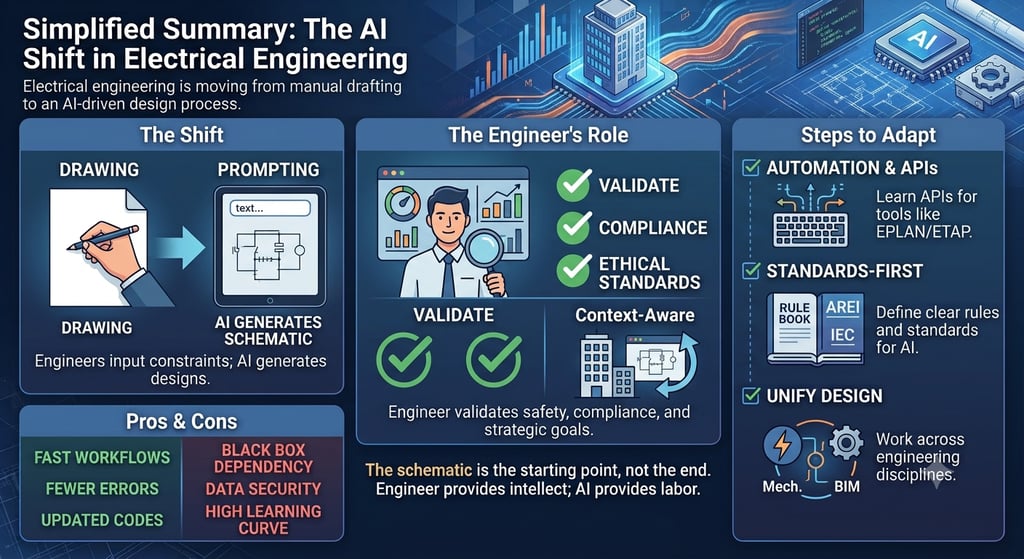
The field of electrical engineering is experiencing a significant transformation, moving from traditional manual drafting methods to innovative AI-driven prompting techniques. This evolution marks a departure from the labor-intensive practices of the past, allowing engineers to redefine their roles within projects effectively. No longer are they solely responsible for the meticulous drawing of schematics; instead, they now focus on defining the parameters and constraints that guide artificial intelligence in generating technical designs.
This shift to prompting encompasses a broad range of tools and technologies that leverage generative AI models. Engineers can input specific project requirements, such as the desired functionalities, structural constraints, and regulatory standards. The AI then processes this information and creates intricate schematics that align with these defined parameters. The efficiency gained through this process is remarkable; tasks that once took days or even weeks can now be completed in a matter of hours.
The introduction of generative AI into electrical engineering also encourages a greater emphasis on creativity and problem-solving. Engineers are now challenged to think critically about project constraints and desired outcomes, leading to more innovative solutions. This evolution allows for greater flexibility and adaptability in design approaches, as engineers can rapidly iterate and modify inputs to generate alternative schematics for different scenarios, enhancing overall project workflows.
Furthermore, this transition alleviates some of the repetitive workloads that engineers faced, freeing them to focus on higher-level strategic thinking and collaboration. As the industry continues to embrace this generative change, the role of the electrical engineer will undoubtedly evolve, blending the art of engineering with advanced technology to create more intelligent, efficient, and robust electrical systems.
The Role of the AI-Supervisor
The integration of generative artificial intelligence (AI) in electrical engineering has revolutionized traditional workflows, leading to significant transformations in the roles of engineers. One of the most notable shifts is the emergence of the 'AI-supervisor' role. In this capacity, engineers are required to oversee AI-generated designs, ensuring they meet stringent safety codes and ethical standards while maintaining high reliability.
The AI-supervisor is no longer primarily involved with manual drafting or design creation; instead, the emphasis has shifted to critical evaluation and oversight. Engineers must validate the outputs generated by AI tools, verifying their compliance with established industry protocols and guidelines. This new responsibility encompasses not just technical accuracy but also an awareness of the broader implications of the designs, including social and ethical responsibilities.
Furthermore, the role of the AI-supervisor highlights the importance of human expertise in interpreting the results produced by complex algorithms. Engineers are tasked with synthesizing their professional knowledge with AI-generated insights, enabling them to make informed decisions that align with best practices and innovation in the field. This dual engagement promotes a collaborative dynamic between human and machine, ensuring designs reflect cutting-edge technology while adhering to traditional engineering principles.
In addition to technical proficiency, the AI-supervisor role necessitates continuous learning and adaptability. As generative AI evolves, engineers must remain updated on new capabilities and tools that can enhance their supervisory functions. They also need to engage in discussions around ethical considerations, such as fairness, transparency, and accountability, which are increasingly crucial in design practices fueled by AI.
Integrated Intelligence in Design Processes
The field of electrical engineering is on the cusp of a transformative evolution, with advancements in artificial intelligence (AI) driving significant changes in design processes. A key aspect of this shift is the development of context-aware systems that seamlessly incorporate real-time data into design documentation. One prominent example of this integration can be observed in Building Information Modeling (BIM), which plays a crucial role in modern architectural and engineering practices.
BIM provides a comprehensive platform for integrating various aspects of a construction project, including electrical systems. With AI capabilities, BIM can leverage real-time updates based on physical site changes, enabling electrical engineers to respond swiftly to unforeseen circumstances. For instance, if a site condition changes unexpectedly, such as the discovery of underground utilities, the AI system can instantly update the electrical documentation to reflect these changes, ensuring that all stakeholders are informed and can adjust their designs accordingly.
This level of responsiveness not only enhances efficiency but also mitigates risks associated with design inaccuracies. By continuously incorporating new data into the design process, engineers can develop more robust and reliable electrical systems that meet the demands of modern buildings. Moreover, the integration of context-aware AI fosters collaboration among different engineering disciplines, as all parties can access the same up-to-date information, leading to better decision-making and project outcomes.
The future of electrical engineering design processes is undoubtedly leaning towards a greater reliance on integrated intelligence. By embracing these technological advancements, engineers can enhance their practices, creating systems that are not only efficient but also adaptive to ever-changing project conditions.
Benefits and Risks of AI in Electrical Engineering
The incorporation of generative artificial intelligence (AI) into electrical engineering projects is revolutionizing the field by offering enhanced efficiency and precision. One of the most significant advantages of utilizing generative AI is the reduction of project timelines. By automating design processes and streamlining workflow, engineers can focus on more strategic tasks, greatly accelerating the development cycle. Furthermore, AI algorithms can analyze vast amounts of data rapidly, enabling engineers to generate optimized design configurations that may not have been discernible through traditional methods.
In addition to improved efficiency, generative AI enhances precision in electrical systems and component design. AI-driven models can simulate various scenarios and predict potential issues, resulting in higher-quality outputs that adhere to stringent industry standards. This capability leads to better product development and fewer errors in the deployment of electrical solutions.
However, alongside these benefits, there are inherent risks associated with AI integration in electrical engineering. One major concern is the 'black box' effect, where the decision-making processes of AI systems become opaque to designers and engineers. This lack of transparency can hinder trust and complicate troubleshooting, as understanding how outputs are derived is crucial for validating design choices. Additionally, security concerns arise with cloud-based AI systems, particularly regarding data integrity and the protection of proprietary information. Insecure cloud environments can leave sensitive data vulnerable to breaches, compromising project confidentiality and potentially leading to significant financial and reputational repercussions.
Therefore, while the integration of generative AI presents notable advantages in electrical engineering—through improved timelines and precision—it is imperative to navigate the associated risks thoughtfully. A balanced approach combining rigorous security measures and transparency in AI algorithms can help in mitigating these challenges, fostering a safer application of AI technology in the industry.
Essential Adaptation Steps for Engineers
The rapid evolution of generative AI technologies has initiated a fundamental shift in the field of electrical engineering. To remain relevant and effective in this changing landscape, electrical engineers must embrace several key adaptation steps. One of the most critical steps is mastering automation and application programming interfaces (APIs). Automation is increasingly becoming central to engineering processes, as it optimizes workflow and enhances productivity. Engineers should focus on learning programming skills and tools that facilitate automation, thereby allowing for more efficient project execution.
Another essential step is adopting a standards-first mindset. As generative AI continues to influence design methodologies, adhering to established standards ensures compatibility, reliability, and safety. Engineers must prioritize understanding and implementing these standards in their projects. This approach not only fosters collaboration across teams but also enhances the overall integrity of the engineering work produced. Embracing standards helps engineers navigate the complexities introduced by AI technologies while ensuring their designs meet necessary regulatory requirements.
Moreover, developing literacy across various engineering disciplines is crucial for thriving in an interconnected design environment. Electrical engineers will increasingly find themselves working alongside professionals from diverse backgrounds, such as software engineering, data science, and mechanical engineering. Building cross-disciplinary knowledge improves communication and collaboration, leading to more innovative solutions. Engineers should seek opportunities for continuous learning, whether through formal education, online courses, or engaging in interdisciplinary projects.
By focusing on these adaptation steps—mastering automation and APIs, adopting a standards-first mindset, and fostering cross-disciplinary literacy—engineers can effectively navigate the generative AI shift. This proactive approach will not only enhance their skill sets but also position them for success in a dynamic and interconnected future.
The Future of Electrical Engineering
As we navigate the transformative landscape of electrical engineering, it is crucial to acknowledge the significant role that generative AI technologies are playing. These advancements are undeniably altering traditional workflows and practices, streamlining processes that were once labor-intensive. However, it is essential to understand that rather than displacing engineers, AI is reshaping their roles, emphasizing the importance of human oversight and expertise.
Engineers are now increasingly becoming orchestration experts, tasked with integrating AI insights to facilitate decision-making in complex electrical systems. In this emerging environment, individuals in the field must adapt quickly, becoming proficient not only in the technical aspects of engineering but also in understanding AI's capabilities and limitations. This shift requires engineers to collaborate with AI tools, harnessing their analytical strength while providing insights that only a seasoned professional can offer.
Furthermore, the demand for validation becomes paramount. As generative AI systems assist in design and development, engineers will focus on ensuring that these technologies produce reliable and safe outcomes. This shift towards a validation-centered approach highlights the necessity for deep engineering knowledge and critical thinking skills, as professionals assess the AI-generated solutions against established standards and safety protocols. Such validation ultimately safeguards the integrity of electrical engineering and ensures compliance with regulatory frameworks.
In conclusion, the future of electrical engineering is not one where machines replace human intellect; rather, it is a collaborative partnership that leverages the strengths of both AI and human capabilities. Engineers will continue to be indispensable, serving as the bridge between innovative AI technologies and the practical applications required in real-world systems. By embracing this shift, the engineering community stands to enhance efficiency, creativity, and safety in the evolving landscape of electrical engineering.